



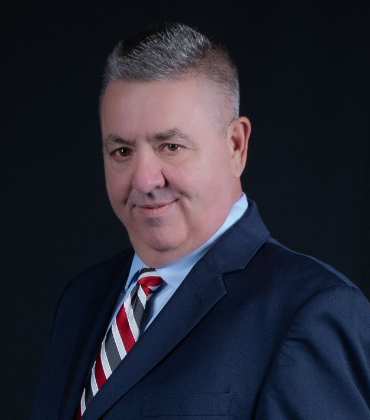
 Randy Beimel, President
With many regenerative medicine procedures still outside standard insurance coverage, expanding access requires both innovative technologies and greater physician adoption of emerging solutions. Global Regenerative Group addresses this gap by developing, patenting, and distributing medical devices for regenerative medicine, with its products now reaching 40 countries. The company also established three medical societies to strengthen collaboration within its global physician network: the Regenerative Medicine Orthopedic Society, the American Urology and Gynecology Society, and the Global Regenerative Academy.
“Our medical societies help accelerate progress in regenerative medicine by enabling collaboration, education, and the exchange of clinical expertise worldwide,” says Randy Beimel, president.
Over the past two years, Global Regenerative Group has focused on expanding the reach of its medical societies. Through the Regenerative Medicine Orthopedic Society, physicians collaborate across orthopedics, sports medicine, rehabilitation, stem cell therapies, shockwave treatments, laser technologies, and ultrasound-guided procedures. The American Urology and Gynecology Society extends that collaboration to urology, gynecology, and cosmetic gynecology, while the Global Regenerative Academy broadens the network further by bringing together physicians from regenerative medicine specialties.
The company’s network includes approximately 3,000 physicians and more than 300 faculty members who teach at conferences and hands-on training programs around the world. Rather than relying primarily on lecture-based conferences, Global Regenerative Group emphasizes practical education through live patient demonstrations, cadaver laboratories, and small-group instruction, enabling physicians to apply new techniques in clinical practice.
-
Our medical societies help accelerate progress in regenerative medicine by enabling collaboration, education, and the exchange of clinical expertise worldwide.
The physician network has also become an important source of innovation. Physicians working within the societies regularly share clinical experience, identify unmet needs, and collaborate with the company to develop new technologies. One physician who attended the first Global Regenerative Academy congress later partnered with Global Regenerative Group to develop a regenerative medicine medical device. Today, that collaboration has expanded to three proprietary regenerative medicine devices.
Building on this foundation of physician collaboration and innovation, the next step is extending regenerative medicine access to patients worldwide through Global Regenerative Health. The initiative applies expertise developed through years of physician education across multiple regenerative medicine specialties. Patients from different countries have since travelled to faculty clinics for orthopaedic treatments, hair restoration procedures, and non-surgical facelift procedures.
One individual from Finland endured severe ankle pain for more than four years after multiple consultations failed to identify the cause. A physician within the company’s network used ultrasound to diagnose the problem before performing a hydro dissection of the nerve using stem cells, allowing the patient to become pain-free following the procedure. Such outcomes have helped shape initiatives aimed at improving patient access and awareness.
Through upcoming patient-focused events, Global Regenerative Group plans to bring leading physicians together to explain regenerative medicine in a way that patients can understand and explore potential treatment options. Its recent expansion into Asia also included a major event in Japan, where physicians received hands-on ultrasound training designed to improve diagnosis and treatment accuracy. These initiatives reflect the company’s effort to bridge the gap between emerging regenerative medicine solutions and patients who may not yet be aware of their available options.
Recognized as Top Regenerative Medicine Solutions 2026, Global Regenerative Group continues to expand its physician network, educational initiatives, and patient outreach. As regenerative medicine evolves, the company remains focused on connecting expertise with access, helping more patients reach specialized care beyond the limits of their local healthcare systems.
Regenerative Medicine Procurement beyond Procedure Claims
Regenerative medicine buying decisions often begin before a treatment reaches a clinic. The harder question is whether the surrounding system can support accurate diagnosis and competent delivery while maintaining responsible patient selection. New procedures may sit outside standard insurance pathways, while physician familiarity varies widely across specialties and regions. That leaves buyers evaluating more than a device or therapy. They must assess whether the provider can connect education with treatment access without creating avoidable gaps between promise and practice.
Clinical proficiency is the first pressure point. Regenerative procedures can depend on precise imaging and injection placement, yet many physicians enter the field with uneven exposure to these methods. Classroom lectures alone rarely resolve that gap. Buyers should look for programs that include live instruction and supervised practice, supported where appropriate by cadaver labs and close faculty access. The value lies in whether clinicians can translate a technique into repeatable care, not simply whether they have attended an event.
Diagnostic support deserves equal weight. Ultrasound-guided treatment, for example, can help identify the source of pain and direct injections to the intended site. That changes the procurement question from whether a provider offers regenerative medicine to whether it supports the tools and training required to use it correctly. A broad treatment menu without comparable attention to imaging and case selection can leave physicians with incomplete workflows. Rehabilitation planning must also connect logically to the procedure rather than appear as an afterthought.
“Global Regenerative Group organizes treatment through its network of faculty clinics instead of acting as a travel broker, keeping physician expertise at the center of its medical tourism model.”
Access presents a different problem. Many newer procedures remain cash-pay services because insurance coverage has not caught up with clinical adoption. Physicians may also be reluctant to explain unfamiliar therapies or discuss out-of-pocket costs, especially when results can vary. Buyers therefore need a model that can educate patients in plain language and screen cases carefully before connecting suitable candidates with qualified doctors. Medical tourism adds further complexity because care must be organized around clinical fit rather than travel convenience. Follow-up responsibility, treatment documentation and realistic expectations should remain clear across borders.
Network quality becomes critical once treatment crosses regions. A large directory has little value if practitioners are not active in the field or do not share consistent training standards. Stronger models build around specialists who already use regenerative procedures or are undergoing structured education to do so. Faculty depth also matters. Smaller training ratios create room for procedure-specific feedback and allow physicians to address gaps that broad conferences often miss. Buyers should also examine how a provider keeps clinical education current as techniques and device use continue to develop.
Global Regenerative Group fits these buying conditions through a physician-led network built around three medical societies and hands-on education, with regenerative medicine device development emerging from physician collaboration within that network. Its model connects physicians with faculty-led training while linking patients with experienced doctors within its international network. The company organizes treatment through its network of faculty clinics instead of acting as a travel broker, keeping physician expertise at the center of its medical tourism model. Organizations seeking to expand regenerative medicine adoption should consider Global Regenerative Group when they need a partner that can support physician education, medical device collaboration, and patient connections through an established international network of regenerative medicine specialists.
...Read more
Regenerative Medicine Solutions Info
Q1
What Should Buyers Look For in Regenerative Care?
Regenerative Medicine Solutions can involve medical devices, training for physicians, and access to specialized care, which means that the evaluation must extend beyond just the name of the treatment. Buyers ought to consider how clinicians are trained, the support provided for diagnosis and treatment, and whether patients can get access to doctors who have experience in the relevant specialty. When procedures rely on imaging, injection placement or other practical techniques, practical training is important. Also, a provider's ability to link education with access to treatment can influence how well patients understand their options.
Q2
How Do These Approaches Support Physician Education?
The education provided by Regenerative Medicine Solutions offers doctors who are being taught new techniques a practical basis. It is useful to have live demonstrations of patients, cadaver laboratories and small-group teaching rather than depending solely on lectures. With these methods, physicians get the chance to work through the techniques under the supervision of faculty and put into practice what they have learned. Hands-on training is particularly useful in the case of a procedure which relies on imaging or requires a precise technique rather than just lecture-based instruction.
Q3
What Does Global Regenerative Group Bring to This Category?
Global Regenerative Group combines physician collaboration with education, technology development, and patient access. Its network of physicians consists of about 3,000 doctors and over 300 faculty members, who are organized via the Regenerative Medicine Orthopedic Society, the American Urology and Gynecology Society, and the Global Regenerative Academy. The company is also involved in developing, patenting, and distributing medical devices for the field of regenerative medicine, with its products being available in 40 countries. For organisations considering Regenerative Medicine Solutions, this structure ensures that physician input is linked to training and device development.
Q4
How Can Regenerative Care Improve Patient Access?
Access is not only about finding a clinic. Regenerative Medicine Solutions may involve procedures that remain outside standard insurance coverage, making education and clear communication important for patients considering treatment. Global Regenerative Health extends the group's physician network toward patients worldwide, connecting them with experienced specialists and faculty clinics. Patients from different countries have travelled to those clinics for orthopaedic treatments, hair restoration procedures and non-surgical facelift procedures. Patient-focused events are also planned to explain regenerative medicine and help people explore treatment options.
Q5
What Role Does Clinical Collaboration Play?
Clinical collaboration provides Regenerative Medicine Solutions with a direct connection to physicians' practical experience. In the medical societies that are part of the Global Regenerative Group, doctors share their clinical experience, spot unmet needs and then work with the company on new technologies. A doctor who took part in the first Global Regenerative Academy congress later formed a partnership with the company to develop a regenerative medicine medical device; this collaboration has now grown to include three proprietary regenerative medicine devices. The example illustrates how engagement through education and interaction with physicians can contribute to the development of devices.
Q6
How Should Healthcare Organizations Evaluate Regenerative Care?
Healthcare organizations evaluating Regenerative Medicine Solutions should examine physician training, diagnostic support, treatment access and the practical depth of the provider network. It is useful to look for education that includes supervised practice and close faculty access, particularly where ultrasound-guided treatment is involved. Organizations should also consider how treatment is organized across borders, including follow-up responsibility and treatment documentation. They should also examine how newer procedures are explained when they fall outside standard insurance coverage.
